
- Products:
- Type (Systemic Broad Spectrum Control) - Buy Product - Heritage MAXX 1lt
- Type (Systemic Broad Spectrum Control) - Buy Product - Tombstone Duo
- Type (Systemic Broad Spectrum Control) - Buy Product - Impala Fungicide 250ml
- Type (Systemic Broad Spectrum Control) - Buy Product - Tribeca Fungicide 250ml
- Type (Contact control) - Buy Product - Surefire Chlortan 720 1 litre
- Type (Contact control) - Buy Product - Daconil Weather Stik 10 ltr
- Type (Systemic Broad Spectrum Control) - Buy Product - Surefire Rapide Aqua 500SC 1 litre
- Type (Systemic Broad Spectrum Control) - Buy Product - Transact 500 5lt
What is Helminthosporium Disease?
Commonly known as “Helmo”, Helminthosporium is a general term historically used to describe a group of turf diseases caused by fungi now classified as Bipolaris, Drechslera and Exserohilum. Depending on the turf species and environmental conditions, these pathogens can cause leaf spot, melting out, crown rot, and root rot.
Helmo diseases are common on cool-season turf, particularly perennial ryegrass, Kentucky bluegrass and Tall Fescue, but can also affect warm-season grasses such as Couch and Kikuyu during periods of stress. While minor infections are largely cosmetic, severe outbreaks can reduce turf density, weaken root systems and leave surfaces vulnerable to weed invasion.
Symptoms of Helminthosporium
Above-Ground Symptoms
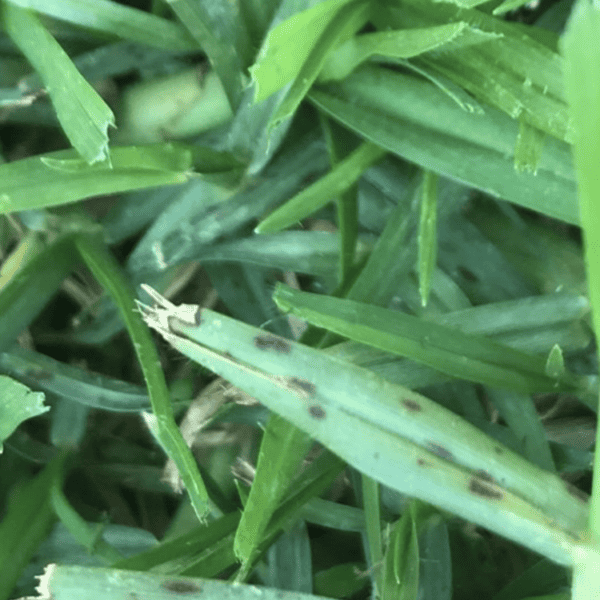
- Small purple, brown or dark tan spots on leaf blades.
- Lesions often develop tan or grey centres with dark brown margins.
- Yellowing and thinning of affected turf.
- Irregular patches of weak or dying grass.
- Severe infections may cause entire leaves to wither and die, resulting in a scorched appearance.
Below-Ground Symptoms
In advanced infections, particularly during the melting-out phase:
- Crown and root decay.
- Reduced root mass.
- Poor turf density and slower recovery from wear.
- Plants may pull easily from the soil.
Conditions That Favour Disease
Helminthosporium diseases are closely linked to environmental stress and poor turf health.
Factors that increase disease pressure include:
- Extended periods of leaf wetness.
- High humidity and poor air circulation.
- Frequent rainfall or excessive irrigation.
- Low nitrogen fertility.
- Soil compaction and poor drainage.
- Excessive thatch accumulation.
- Close mowing heights and heavy traffic.
Disease activity is most common during spring and autumn but may continue throughout summer where humidity remains high.
Management Strategies
Cultural Control
Maintaining healthy, actively growing turf is the most effective long-term defence against Helminthosporium.
Recommended practices include:
- Maintain balanced fertility, particularly adequate nitrogen.
- Improve airflow and sunlight penetration.
- Irrigate deeply and infrequently while avoiding prolonged leaf wetness.
- Reduce thatch and relieve soil compaction through regular aeration.
- Follow appropriate mowing heights for the turf species and avoid removing more than one-third of the leaf blade in a single cut.
- Minimise turf stress from traffic, drought and nutrient deficiencies.
Promoting healthy root growth and reducing plant stress will significantly reduce disease severity.
Fungicide Control
Fungicides may be required on golf courses, sports fields and other high-performance turf where disease pressure is high.
For best results:
- Apply fungicides preventatively or at the first signs of disease.
- Rotate FRAC groups to minimise resistance development.
- Combine fungicide applications with sound cultural practices for long-term control.
Preventative applications during periods of warm, humid weather are generally more effective than treating severe outbreaks.
Recovery
Most turf will recover well once environmental conditions improve and healthy growth resumes. Balanced fertility, particularly nitrogen, combined with good irrigation and mowing practices will encourage new leaf production and restore turf density.
Where crown or root damage has occurred, recovery may take longer and additional renovation practices such as aeration or overseeding may be required.
Key Takeaway
Helminthosporium diseases are among the most common foliar diseases in turf and are often a sign of underlying turf stress. Maintaining balanced nutrition, reducing moisture on the leaf surface, improving airflow, and minimising plant stress are the foundations of successful disease management. Preventative fungicide applications can provide valuable protection on high-quality turf during periods of elevated disease risk.
Message Lawn Addicts for further advice on other fungicides and lawn care products, available online.